

Choosing a Microwave Oven Builtin
A built-in microwave is an ideal option if you're tired with freestanding models that take up space on the worktop. They are designed to fit into cabinets and certain models can be mounted flush for a clean look.
Even though features such as sensor cooking and pre-programmed settings are useful, choose only one that comes with features you will actually use. Don't forget the cost of installation. This should be completed by professionals.
Size
When selecting a built-in microwave oven, you must consider the dimensions of your kitchen cabinet and cabinet into consideration to ensure you select the correct model for your space. Microwaves are typically available in 27-, 24-,- and 30-inch widths to adhere to standard sizes for cabinets. You should also think about the capacity, as this will determine the amount of a meal it is possible to cook at once.
Cost is a key factor to consider when choosing a microwave. Microwaves are available in various price ranges according to the size, features, and the brand you select. In addition to the cost of the appliance, you'll also have installation costs to consider. Freestanding microwaves are less expensive to purchase and install since they can be put on the counter.
Power
The cooking power (wattage) of a microwave determines how fast and efficiently your food will be cooked. Generally, higher wattages cook faster, though less expensive models can still satisfy the majority of requirements. We suggest choosing a model that has at least 1,000 Watts. Microwaves with a lower wattage are less likely to cook evenly and take longer to warm food than microwaves that have a higher wattage.
To find the amount of wattage in your microwave, consult your user manual or check the serial number plate on the inside. You can compare the wattage among different models to determine the best one for your requirements.
There are microwaves designed to fit inside cabinetry or even installed into a wall to give an integrated appearance. Certain microwaves come with high-end finishes and feel for a premium appearance. this website can also find countertop microwaves that come with integrated installation kits to save space and get an individual look for your kitchen.
Although a microwave with an integrated oven has a sleek appearance, you'll pay more for the convenience of this option in comparison to other types of microwaves. It can be more difficult to repair or replace these models when they fail, and you'll have to pay for an expert to install them in your kitchen. Over-the-range microwaves and counter-top models aren't required to pay for installation. You'll have to make sure that the model you select fits the location you intend to use it in. You'll need to measure the space to ensure that you can find an appliance with the capacity that meets your requirements. The larger the microwave must be to accommodate the dishes, the greater power you will require.
Convection
Convection is a feature which allows a microwave oven to bake or brown food, in addition to reheating. The fan and heating element of the microwave oven work together to circulate hot, dry air around the food in the microwave, just like an oven. This helps the appliance cook food more evenly.
The magnetron inside the oven emits microwave radiation, which cooks and heats the food. Microwaves, a non-ionizing electromagnetic wave, have not been shown to cause cancer in long-term studies conducted on rodents. Unlike conventional ovens that produce high-energy radiation that could cause burns, the microwaves generated by a microwave oven are emitted through the door of the oven, and do not pose the risk of injury to anyone.
Vibrations and the different rates at which food absorbs energy can result in uneven heating of dishes that have been microwaved. This issue can be cured by stirring the food, or using a the use of a turntable that rotates the dish as it cooks.
Some built-in microwaves can be installed in a cabinet to create a seamless look and provide easy access. Trim kits are available for these models to close any gaps between the microwave and cabinet. This gives the model a seamless finish. Other models are countertop models that are placed on countertops in kitchens and plug directly into a power outlet. A countertop model is an excellent alternative to an oven or microwave that is mounted on a countertop. Some countertop models include a drawer that can be opened and closed by pressing a button. This makes them even more accessible.
Controls
A built-in microwave eliminates the need to have an additional appliance that takes up counter space. It can be mounted to the wall or installed in a cabinet to create a seamless appearance in your kitchen. It is important to choose the right size and power as well as features to meet the needs of your family.
Controls on a builtin microwave vary, but typically comprise an LCD or LED display to program and read cooking results, buttons to select the cook time you want and a defrost option. Some models include a sensor that automatically detects and defrosts foods with the push of a button. A key lock and timer will stop any unintentional or accidental operation, while a safety lock ensures that the oven will not be run even when the door is closed.
Some manufacturers have models with touch screens to provide added convenience. Other models come with finishes such as stainless steel with PrintShieldTM which resists fingerprints and smudges. A microwave tray that is dishwasher safe makes cleanup easier.
Microwave ovens heat food with electromagnetic waves of extremely short wavelengths that vibrate molecules directly inside the cooking chamber. The technology was developed following World War II using radar technology, which was employed during the conflict. The radiation produced by the microwave is not Ionizing and is not any health risks when the oven door is closed and secured properly.
A built-in microwave is a great alternative to the countertop or undercounter model and can also be installed in a wall or over-the range oven. Installing the appliance is done by a professional. It could be necessary to replace a cabinet panel in order to accommodate the new appliance, based on the space available. You should also think about whether the existing cabinetry is able to take on the airflow and noise generated by a microwave.
Style
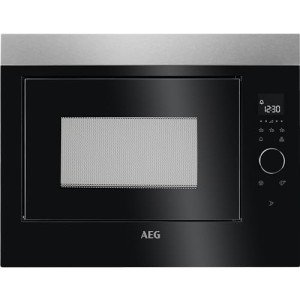
Built-in microwaves are a great alternative to conventional countertop microwaves. While they sit on your counter, and over-the range models rest directly above your stovetop Built-ins are built into your cabinetry. This gives them a sleeker look. They are available in a variety of designs, such as flush mounts and slide-out drawers that allow you to install them at a suitable height for your family and make an easy transition into your kitchen. These microwaves also come with additional features that are high-end for a premium feel.
When you're weighing your options it is important to think about how often you use features in a microwave and whether they fit your day-to-day cooking routine. For example, pre-programmed settings and defrost options can make cooking for busy families, but you'll want to determine if these features actually provide convenience or just replace manual steps.
Certain manufacturers have also delved in combination microwave-ranges, which combine a traditional oven and microwave capabilities. These units can be a good option for households that frequently use microwave and conventional heat sources, but are limited by limited countertop space.
No matter which model you choose, it's essential to verify your local codes and regulations prior to installing an appliance at home. You may require a permit or installation assistance from a professional particularly if you require ductwork. It is also important to ensure that the area in which the microwave is to be installed has adequate ventilation. A venting system will ensure that the appliance is safe and decrease the chance of carbon dioxide poisoning.